

You can start a custom T-shirt business in India with ₹20,000, but you can also spend ₹5 lakh before selling your first shirt. The difference depends on how you plan to print your designs.
Beginners can outsource printing and focus on finding customers. A small home business can use a heat press with ready-made transfers. Producing prints with your own DTF equipment requires considerably more money.
A realistic starting budget ranges from ₹10,000 to ₹30,000 for outsourced printing, ₹35,000 to ₹90,000 for a home heat press setup, and ₹3 lakh or more for commercial DTF production.
The cheapest setup is not always the most profitable. A business receiving 500 orders every month has different equipment needs than someone selling 20 custom birthday T-shirts.
How Much Does a T-Shirt Printing Business Cost in India?
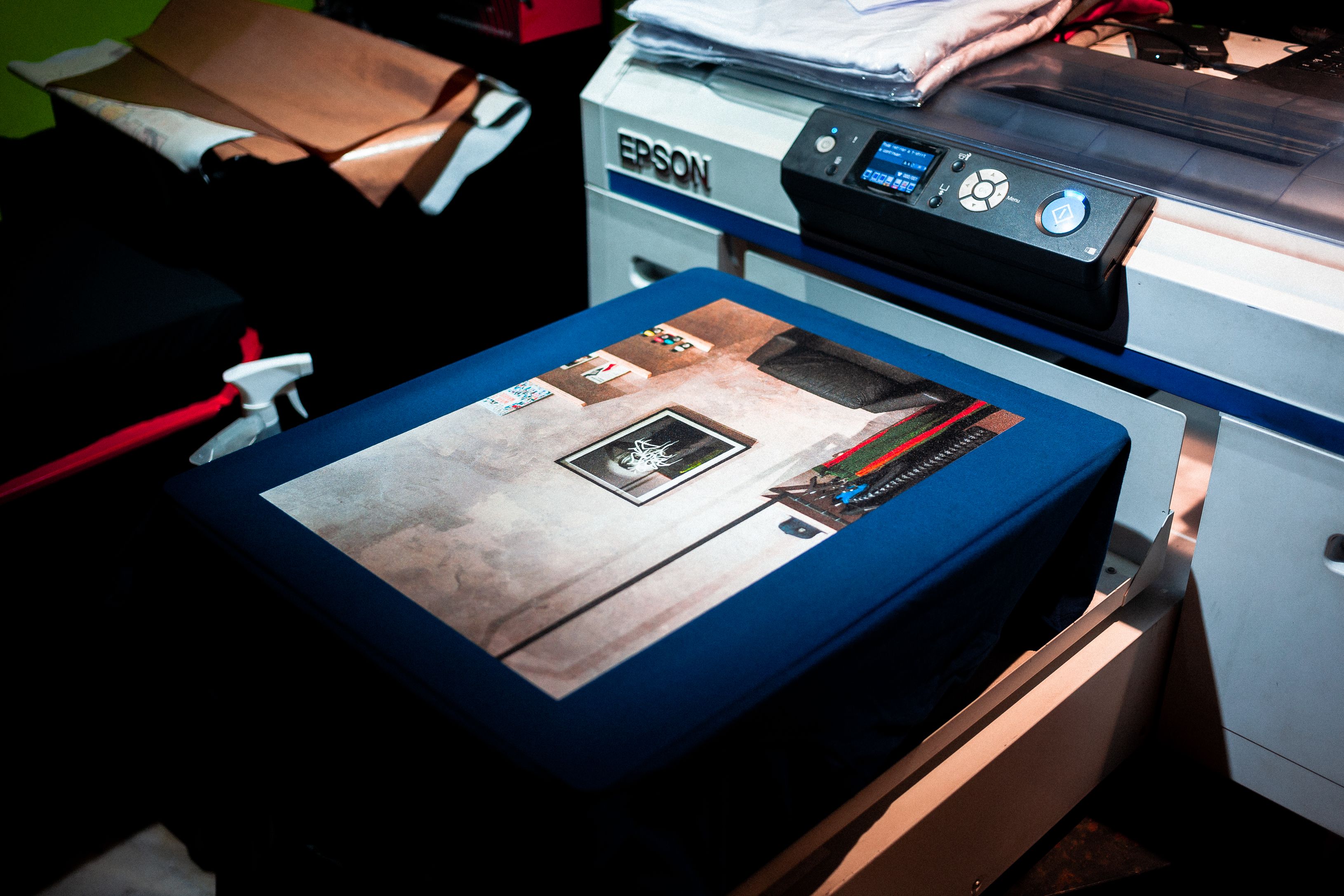
Before buying equipment, decide how you want to operate. Three common approaches have very different startup costs.
Figures are illustrative planning estimates, not current supplier quotations. Costs vary by equipment capacity, workspace, taxes and production requirements.
A rented shop, employees or commercial production space will increase the investment. The first two estimates assume that you already have somewhere suitable to work.
Starting Without a Printing Machine
Suppose you want to sell custom T-shirts to college students in Lucknow. You create a few designs, advertise them online and collect orders.
Instead of purchasing machinery, you send the designs to a printing service and pay for each completed shirt.
An illustrative startup budget could include ₹5,000 for samples, ₹10,000 for initial orders and ₹5,000 for packaging and advertising.
That gives you a ₹20,000 starting budget without buying a printer.
The disadvantage is your dependence on another company. Late production, poor print quality or incorrect sizes can damage your reputation even when someone else made the mistake.
Order samples and wash them before accepting larger orders. Check how the print behaves after cleaning and confirm the actual garment measurements.
Starting at Home With a Heat Press
A heat press lets you apply printed designs to blank T-shirts using controlled heat and pressure.
For beginners, buying ready-made transfers is often easier than producing them. You pay for the artwork, apply it to the garment and handle the finished order yourself.
Consider the following example for a small home setup.
The figures are hypothetical amounts for budgeting. Delivery charges, taxes and additional equipment may increase the total.
Keep enough money available to replace defective shirts and purchase new stock. Spending your entire budget on equipment leaves little room for unexpected orders or mistakes.
How Much Does a DTF Printing Setup Cost?
Direct to film printing, commonly called DTF, produces designs on special transfer film. Adhesive powder and heat are used to prepare the transfers before they are pressed onto suitable fabrics.
A dtf printing machine can produce detailed illustrations, photographs and multicolored artwork for custom clothing. Businesses planning regular production should consider the complete printing workflow before choosing equipment.
The printer is only one expense. A commercial setup also needs suitable curing equipment, a heat press, transfer film, ink, adhesive powder and printing software.
Installation, ventilation, electrical requirements and maintenance can increase the initial investment.
For an Indian startup, budgeting several lakh rupees for commercial DTF production is more realistic than assuming that the cost of the printer alone covers the entire business.
There is also an ongoing maintenance commitment. White ink systems need regular attention, and clogged printheads can interrupt production.
Buying a printer becomes easier to justify when you already have consistent orders or regularly spend substantial amounts purchasing transfers.
How Much Does One Printed T-Shirt Cost?
The actual cost depends on the garment, design size and production method.
For a basic cotton T-shirt, consider a hypothetical blank garment costing ₹175. Add ₹45 for a purchased transfer and ₹25 for packaging.
Now suppose you sell the finished shirt online for ₹499.
The ₹109 is the amount remaining before fixed business expenses and taxes. The example assumes no customer return or damaged product.
Profit can improve when selling several shirts in one order because delivery and advertising costs may be shared.
Shipping Costs Can Change Your Profit
Delivery is easy to underestimate, especially when selling inexpensive clothing.
For example, India Post parcel rates introduced in August 2026 list ₹28 for a local parcel weighing up to 500 grams and ₹72 for delivery to another state, before applicable GST.
Other shipping services have different rates and conditions.
A seller charging ₹499 for a T-shirt cannot ignore an ₹80 or ₹90 delivery bill. The margin becomes especially vulnerable when customers return products because of incorrect sizing.
For custom orders, clearly explain delivery charges and confirm sizes before printing.
How Many T-Shirts Must You Sell to Recover ₹50,000?
Using the earlier example, each sale contributes ₹109 toward recovering your investment and covering remaining expenses.
At that rate, selling 459 T-shirts would generate ₹50,031 in contribution.
If you sell 50 shirts per month, reaching that number takes a little over nine months. Selling 150 per month would reduce the period to just over three months.
The calculation assumes identical prices and costs on every order. It also excludes additional overheads, so actual recovery may take longer.
Before buying expensive equipment, calculate how many shirts you would need to sell each month to cover the investment.
Track incoming payments and operating costs as part of small-business cash-flow planning.
Where Can You Find Customers?

A new printing business can begin with local orders rather than competing immediately with large fashion retailers.
College events, sports teams, coaching centers and small businesses can all provide opportunities for customized clothing.
For example, an order for 100 shirts for a college farewell event can be easier to plan than trying to sell 100 individual designs online.
Start by approaching organizations that already purchase clothing in groups.
Sellers exploring online channels can review the ONDC seller onboarding guidance for information about joining the network through a seller application.
- Colleges and schools. Event merchandise, farewell shirts and student club clothing.
- Gyms. Staff uniforms, branded workout shirts and fitness event merchandise.
- Restaurants. Printed T-shirts for employees and promotional events.
- Sports teams. Team names, player numbers and club designs.
- Small companies. Work uniforms and staff clothing.
For bulk orders, request an advance payment and confirm the artwork before production. A mistake repeated across 100 shirts is considerably more expensive than a mistake on one sample.
Common Mistakes That Cost New Sellers Money
Buying machinery too early is a major financial risk. Several smaller mistakes can also reduce profits.
Ordering too many shirts in the wrong sizes ties up money in unsold stock. Printing designs without customer approval creates expensive replacements.
Incorrect color reproduction and poor-quality transfers can result in returns. Sellers also lose money when they promise delivery dates that suppliers cannot meet.
Clear sizing information, realistic delivery estimates and reliable customer service help reduce disputes and encourage repeat orders.
For online sales, calculate the cost of failed deliveries and returned shipments before deciding how much to spend on advertising.
Do You Need Business Registration or GST?

Source:123rf.com
Eligible small businesses can register as micro, small or medium enterprises through the government Udyam registration portal. The registration process is free and completed online.
GST requirements depend on turnover, location and how products are sold. Online marketplace sales and interstate transactions can involve additional conditions and exemptions.
Before accepting orders nationwide, review the applicable GST rules and registration requirements or consult a qualified tax professional.
Businesses opening commercial premises should also check local licensing and workplace requirements.
If you sell garments in retail packaging, review the Department of Consumer Affairs’ packaged-commodity declaration requirements as part of your compliance checks.
How Much Should You Invest First?
Someone with no customers should avoid spending several lakh rupees on machinery before testing demand.
A smaller investment in samples, a heat press or outsourced printing gives you room to discover which designs, sizes and customer groups generate actual sales.
Once you have regular orders and reliable cost records, compare the expense of purchased transfers with owning a printer.
The best time to expand is when existing sales can support the investment. An expensive machine will produce beautiful designs, but it cannot guarantee that anyone will buy the T-shirts.